

Dance It Out: A Practice in Queer Joy and Embodiment
Queer Joy Practice #14

This is How To Queer Joy, a newsletter dedicated to LGBTQ+ mental health and joy practices, written by queer psychologist Kiki Fehling.
Hi everyone!
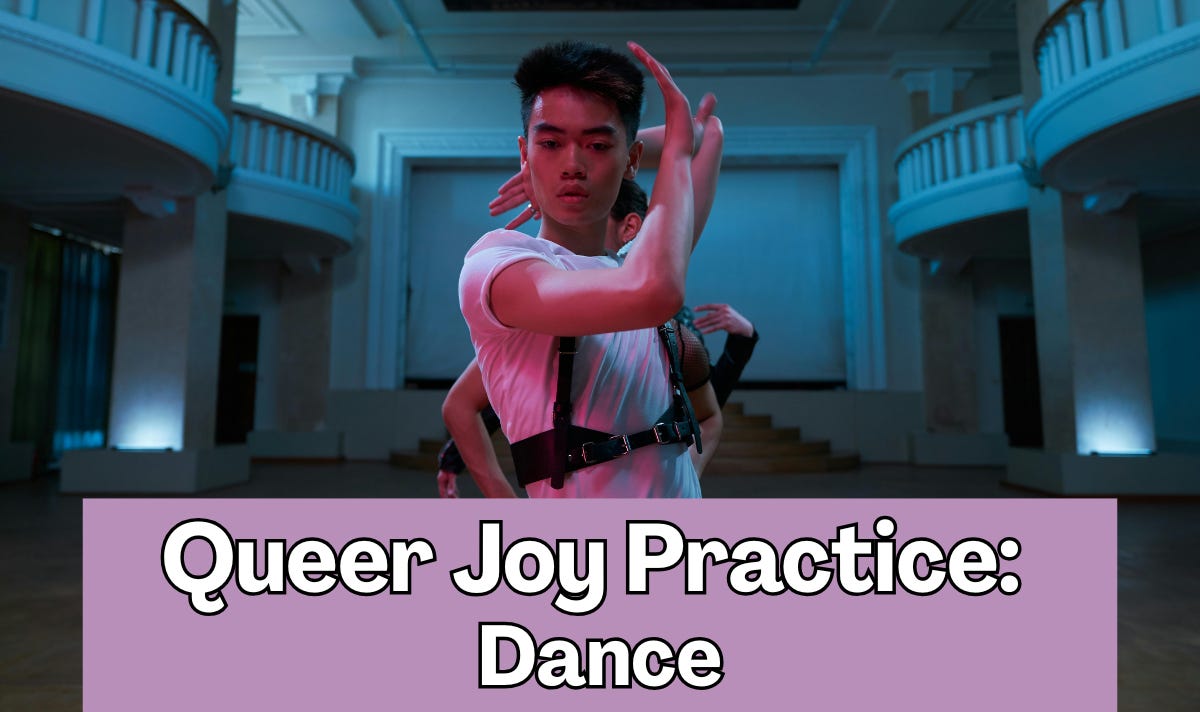
This week, I’m in DC attending Creating Change, the annual conference of the National LGBTQ+ Task Force. I just sat down in a common area to write this post, and a beautiful group of women in quinceañera dresses started to dance together. Perhaps I’ll have more to say about this fabulous conference another time—it’s definitely a place full of queer joy—but for now, I want to encourage you to take advantage of this same foundational queer joy practice: dancing.
(Heads up: below, as a part of this week’s practice, I ask you to share some favorite music— let’s co-create a queer joy playlist!)

Dancing as Queer Joy: A Long History
Dancing is a pretty universal form of human joy, but it’s also always been a very big deal for LGBTQ+ people. Voguing and ballroom. Drag queens and kings and things. Gay bars and clubs.
Dance has been a form of queer survival. It’s a way to connect with community. It’s also a way to connect with oneself by taking ownership of one’s body, taking up space, and expressing oneself with abandon. It allows for gender play and liberation. It doesn’t require positivity. It doesn’t require performance (unless you want it to). It offers a way to feel your emotions fully. Dance can be a powerful way to express, celebrate, and affirm queerness.
Just in case you’re not convinced…

Dancing as Queer Joy: The Science
Research backs up what queer people have always known: dance is good for us. Dance has been shown to have positive impacts on various mental and physical difficulties.
Dance therapy may be particularly helpful for queer and trans people’s mental health, because our bodies and bodily desires have so often been culturally policed. Dance supports identity exploration, gender affirmation, and improved coping with minority stress. One study explicitly found that participating in drag benefitted trans women’s mental health.
Dance is a uniquely powerful way to tap into queer joy that is also relatively easy to access… And yet, a lot of people seem to forget about it in today’s hustle and bustle. So, I encourage you to truly practice!

How to Practice: Dance
Turn on some favorite LGBTQ+ music* and move.
This practice is not about looking good, doing fancy choregraphy, burning calories, or trying to be happy. It’s about feeling good, touching into embodiment, expressing yourself, and being present. Dance allows you to reconnect with and take care of your body’s unique needs.
Stick to your abilities and energy levels. Avoid dysphoric or painful movements. Choose a safe space where you feel most free to be yourself. Ask a loved one to join you, if you want!
Dance.

Dance—And Share Your Favorite Music!
As a part of this week’s practice, I ask you to please share with me your favorite music to dance to for queer joy! Maybe it’s music by queer people, or just music that makes you feel most connected to yourself, that most makes you want to dance.
*As Max says over at Lavender Sound (Max Freedman), “if a queer person likes a song, then that song is music for queer folks.”
If I get enough responses, I’ll compile a playlist and send it out with my post next week. So please send your song(s)!
Until then,
Kiki


Thanks for this Kiki. Dance is life 🩷. Going way back to the fluid shapeshifting David Bowie Let's Dance, to Lady Gagas Born This Way, to the upcoming British singer Beth McCarthy's Bi Anthem, Good Bi 💙💜🩷 such a variety of queer joy music is out there!
I love to dance! Back in the day I loved Erasure, and I listened to the The Innocents album on repeat. I recently discovered a bi anthem that is fun to dance to called Not a Phase by Jessie Paege and Lucy & La Mer. :)