

Read Queer Books.
Queer Joy Practice #22

This is How To Queer Joy, a newsletter dedicated to LGBTQ+ mental health and joy practices, written by queer psychologist Dr. Kiki Fehling.
This week’s practice: reading queer books. LGBTQ+ books offer pleasant distraction, safe refuge, identity exploration, and community belonging — all from the comfort of your own favorite reading nook.
I’ve got queer books on the brain this week.
Perhaps this is not surprising, given my own LGBTQ+ book finally published this week!! (More on that at the end.) But my social media algorithms are also really pushing BookTokers’/Bookstagrammers’ posts with rainbow book stacks in honor of Pride. Fellow queer author Cody Daigle-Orians and I just talked about our shared experience of feeling strongly motivated to write books specifically for queer readers.1 And, last week I finished reading Dawn by Octavia Butler (ummm, whoa!), this week I finished listening to the audiobook of the sapphic romance novel Every Step She Takes by Alison Cochrun (so lovely, fun, sexy, and validating!), and next-up on my physical TBR is the anthology Seahorses: Trans, Nonbinary, and Gender-Expansive Pregnancy (can’t wait!). Lots of queer books.
So. Reading LGBTQ+ books is the focus of this week’s practice! Simply: Queer books really matter. And reading queer books can be a particularly useful and powerful way to access and practice queer joy.

The Power of Reading Queer Books
Reading books with LGBTQ+ characters, written by LGBTQ+ authors, and showcasing queer themes can have so many benefits for LGBTQ+ mental health.
Queer books offer protective refuge.
First off, getting lost in a good book is pleasurable. While reading for pleasure can have many benefits, it can be particularly useful as a way to get temporary relief and distraction from a stressful life. Reading queer books can offer queer readers an escape from anti-LGBTQ+ prejudice, specifically. But beyond distraction, they also offer protection against stigma. If you hear homophobic, transphobic, biphobic, acephobic, and other queerphobic messages enough times, they can needle themselves into your psyche. Reading queer books supports you in combatting these types of negative and painful messages about queerness, by replacing them with positive and affirming ones.
Queer books offer safe identity exploration.
Reading queer books may help LGBTQ+ people navigate queer dialectical tensions and increase their comfort with the “not-knowing” or fluidity that can characterize queer identity discovery, coming out, or transitioning. Books with LGBTQ+ representation can also help queer adolescents (and queer people in general) explore and discover identity language that fits, or feel more confident and self-accepting of their queer identities. By breaking or diverging from cisheteronormative narratives, queer books offer new models and images for what life can look like, what families can look like, what joy and love can look like; this, in turn, allows the reader to imagine new lives/families/joy for themself. Within stories, queer people can live lives that they don’t have access to because of discrimination, stigma, or isolation.
Queer books offer queer belonging.
Queer readers of queer books often connect in various ways: online, at local queer-owned bookstores, or through engaging with favorite queer authors. But the connection that queer books provide doesn’t depend on a reader’s outness or access to LGBTQ+ spaces. Without ever leaving the privacy of their own home/head, a queer person can emotionally or spiritually connect with LGBTQ+ community through queer stories. Reading queer memoirs and books, seeing themself reflected in the pages, and better understanding collective LGBTQ+ history can help a queer person feel more connected to queer ancestors and the community at large.

How To: Practice Queer Joy with Queer Books
To get any of the above benefits, and more, read queer and LGBTQ-inclusive books.
Read a queer novel to dive into fantasy, feel new experiences, or explore queer life paths (without needing to actually change anything about your life — for now, at least!).
Read memoir from queer people who share your identities to feel validated. Or read memoir from queer people with different identities to learn more about the greater community.
Read other queer nonfiction to learn about LGBTQ+ history, LGBTQ+ health, queer theory, or collective liberation.
Donate to or gift queer books to LGBTQ+ community centers, prison abolitionist projects, or other organizations that need them (particularly in the current climate of book bans).
Find and connect with queer authors/writers here on Substack! There are many of us. QStack offers a big, lovely list and larger community.

One More Way Books Support Queer Joy
One final way that you can benefit your mental health through books is by reading queer-specific/LGBTQ-affirming self-help books. Research suggests that when self-help books are based on research-backed psychotherapies, they can be helpful for reducing depression, anxiety, and other mental health difficulties.
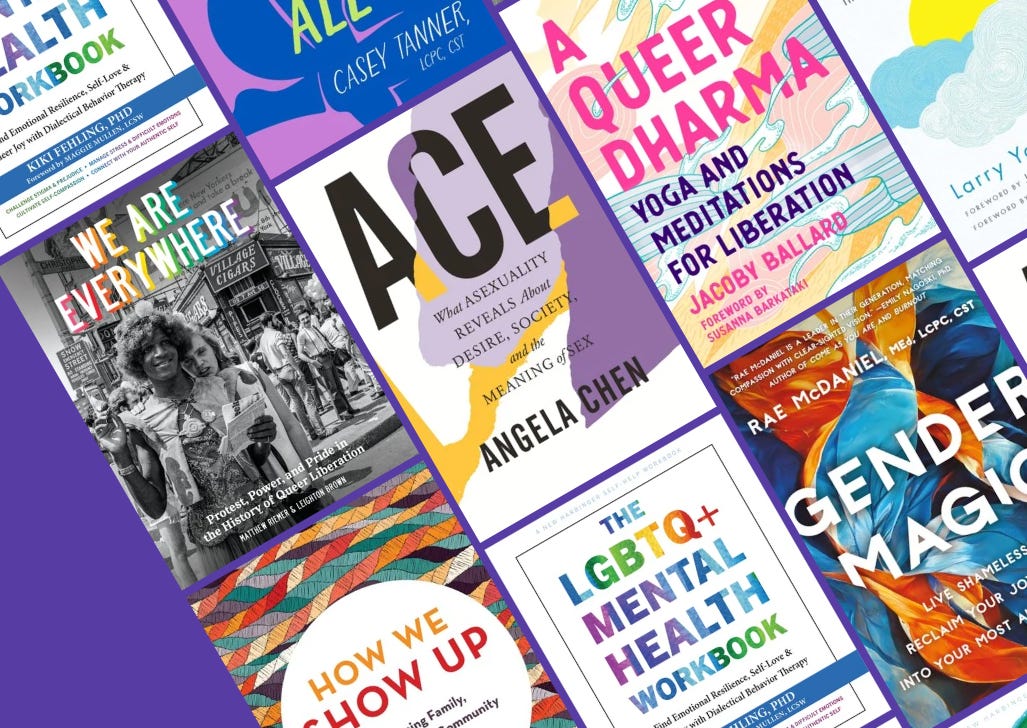
My new book that was just published this week is called The LGBTQ+ Mental Health Workbook. It’s based on Dialectical Behavior Therapy (DBT), an evidence-based therapy for many mental health struggles that has been shown to be helpful for LGBTQ+ people specifically (at least, when it’s adapted to fit our needs). I wrote this book after seeing the way that DBT helped my queer clients better understand themselves, affirm their identities and desires, overcome shame, and find more queer joy. (And after experiencing the way it helped me do the same.) If you’ve been enjoying my writing here, I really think you’ll like and benefit from my book! You can click here to learn more about it.
In the meantime, please also comment below or respons with your favorite LGBTQ+ books! Which queer books deeply impacted you, helping you more fully discover and accept yourself? Or, simply, which books have brought you queer joy? (See here for a list of some of mine!)
Happy Pride,
Kiki


We actually talked about this topic as a part of an interview that Cody will be posting to Substack! Follow him to make sure you see the post when it’s out, and to read his awesome writing.
Ace by Angela Chen, I Am Ace and The Ace and Aro Relationship Guide by Cody Daigle-Orians (looking forward to their picture book, Love Looks Like Lola!!)
Thank you for this!